Mattias Cross, Computer scientist
Hello, I am a PhD student at the Centre of Doctoral Training in Speech and Language Technology. My project is "unsupervised speech recognition", supervised by Dr. Anton Ragni. We plan to find speech-to-text methods that do not require vast amounts of labelled data, and instead learn to align a mapping of unmatched speech and text data through generative modelling. This will make technologies such as automatic subtitling and virtual assisstants (Siri, Alexa...) accessible to many languages and accents. I hope you have an excellent day!
Download CVProjects
An immune inspired algorithm for fault tolerant multimodal machine learning
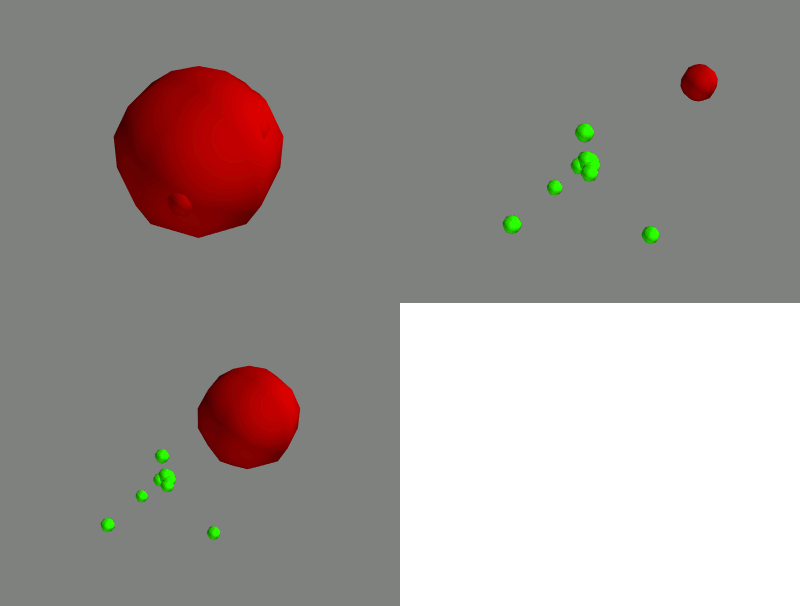
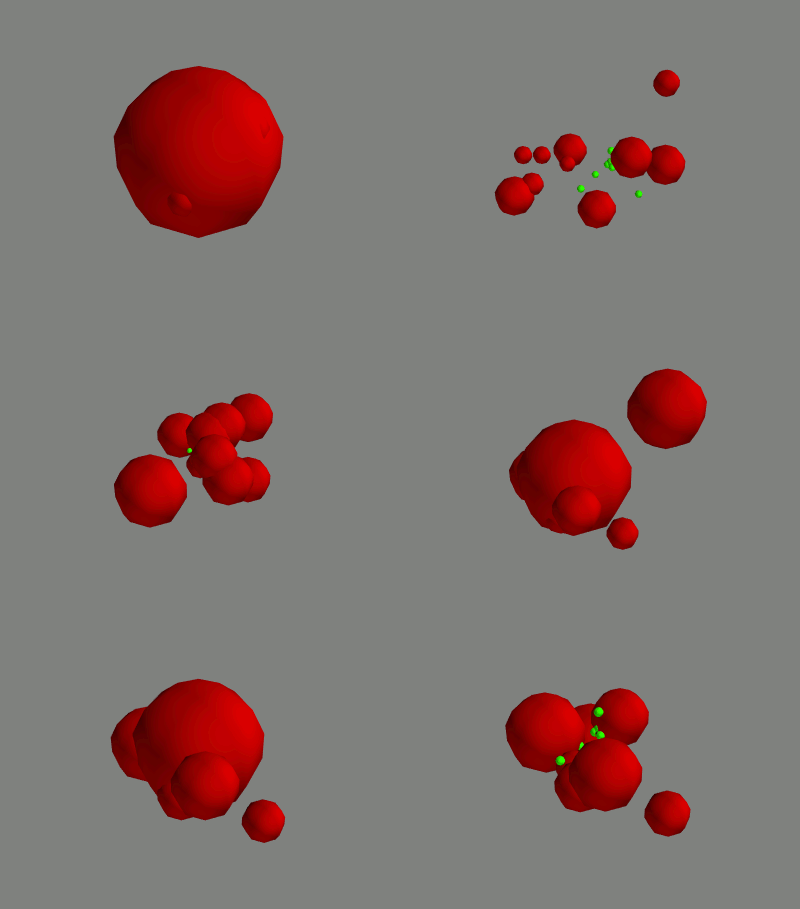
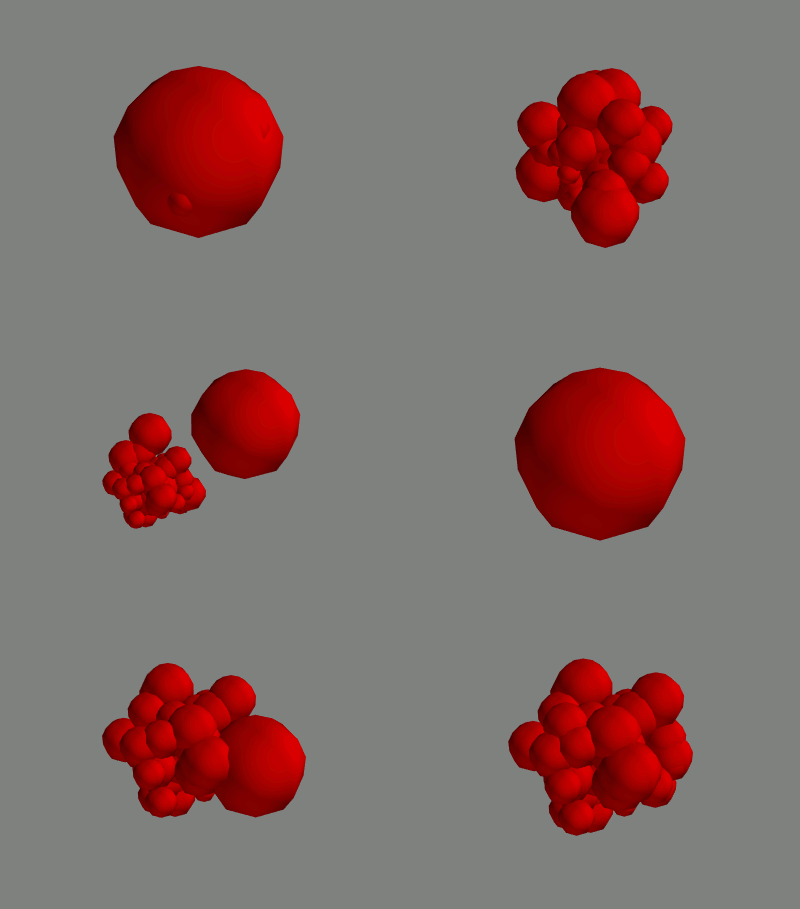
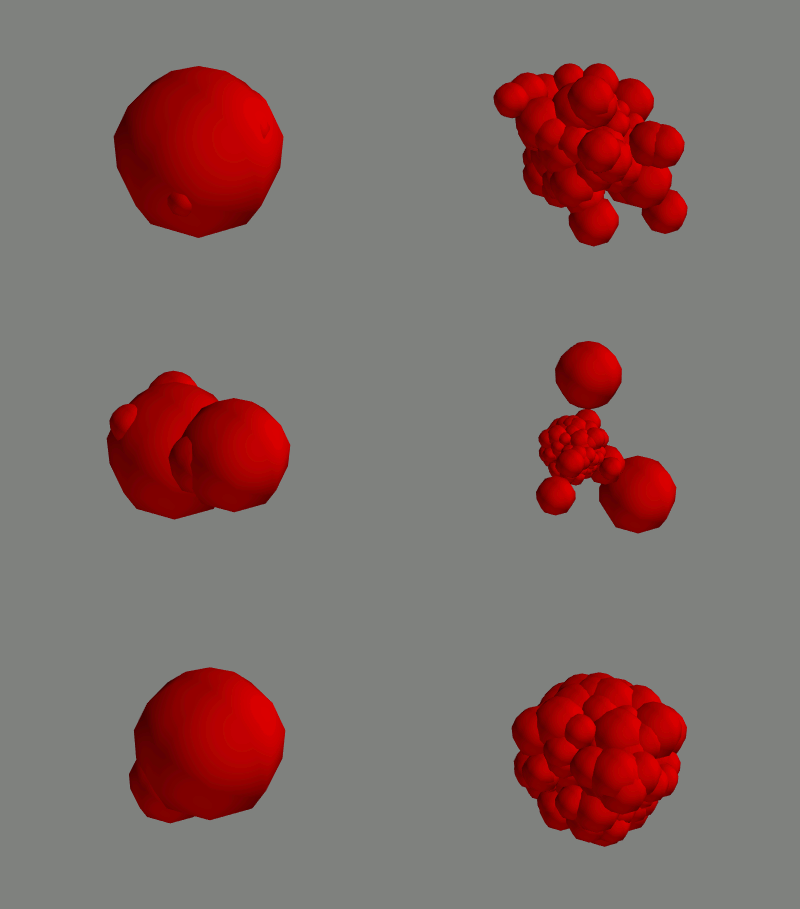
The animations above show the generation of an artificial immune system for multimodal exercise logging data. The goal is for the detectors (red) to encompass space where clean data (green) may perturbate if the input device experiences noise. This increases the fault tolerance of multimodal machine learning models for automatic exercise logging (such as mmfit). This project was published at the IEEE BIBM 2021 conference workshop: Machine Learning and Artificial Intelligence in Bioinformatics and Medical Informatics (MABM 2021).
View paperStanford ilabs RPi project

Employed by the University of Sheffield's faculty of engineering, this project aims to provide a framework for creating digital portable lab experiments. Our methodology involves using multiple high-quality cameras each controlled by a Raspberry Pi. The above image is a fun test photo. This allows a user to log into a server that prompts for the value of each experiment variable at its current state. Each camera then takes a labelled photo and stores it on the server and updates a CSV file with the variables and photo labels. Capturing experiment photos in such an organised manner enables a user to produce a detailed record of the experiment which can be shared online, aiding other researchers in reproducing experiments accurately.
Software hut
Part of completing an MComp computer science requires passing the module "software hut". As a team of 5 computer science students, a web app was developed that allows linguists to create unubiquitous questionnaires. The difference is that these questionnaires contain many sound-related questions e.g. "click when you hear Sheffield dialect". The web app is also used to log the questionnaire answers and share them with sub-users who can edit the questionnaire if given permission. The web app was made under the request of a real client unfamiliar with the software development process.
Engineering - you're hired
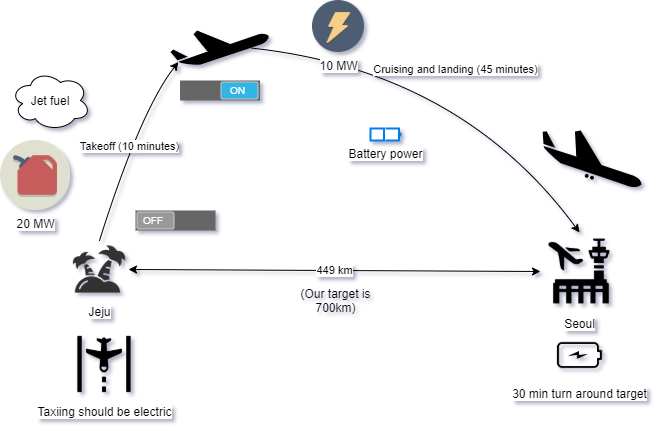
Another requirement of the MComp is a week-long multidisciplinary design project. This involved proposing a method for electric hybrid planes to decrease the impact of air pollution from aircrafts. The solution was to use fuel for take-off and use battery power elsewhere for the most common flight path (Seoul - Jeju). After presenting our research and development outline, our team received a distinction.
Education
University of Sheffield
Studying an MComp at Sheffield requires a broad span of fundamental knowledge and skills. Covering both theoretical and practical elements of computer science, each module forms a solid foundation for solving a wide range of problems related to computer science. Naturally, many programming languages are taught throughout the course. This forms a versatile tool kit that can be applied to tasks ranging from software engineering to artificial intelligence. At the University of Sheffield, there is a focus on teamwork. Many assignments were completed as a team with the quality of teamwork playing a factor in grading a student.
Richmond School & Sixth Form College
Achieved A-levels in maths, physics and computer science (A, A, B respectively) and an AS in French (B). For GCSE, A* was achieved for maths, triple science, computer science and French. Additionally, an A, 3 Bs and a C were met.
A bit more about me
Outside of the office, I climb and do Muay Thai kick boxing (not at the same time though). I also enjoy playing piano and reading philosophy e.g. Wittgenstein.
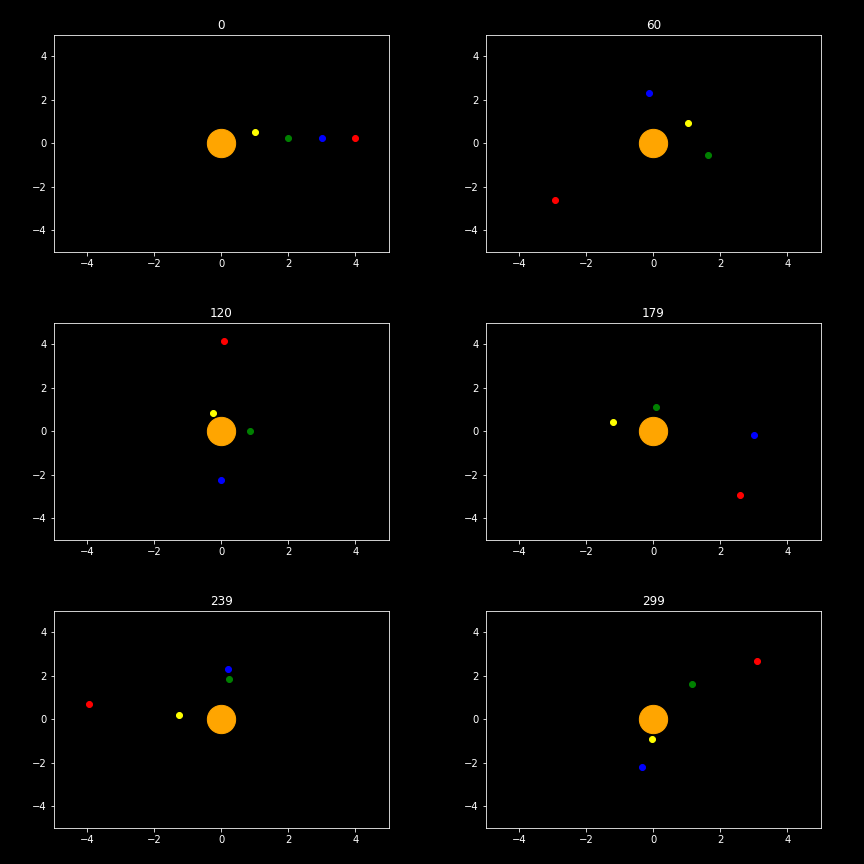
I am also a fan of astronomy, here is a planet orbit simulation I wrote in a Jupyter notebook.